To Our Delight
There is no one on this earth who has a more beautiful heart and soul than my grandmother. Her own mother named her second daughter after herself, and there is no more suitable a name: Delight.
“Dede”, as she’s known to her grandkids, and I have had and maintained a very closely bonded relationship since I was born. She and my grandfather have always lived no more than a five-minute drive from my parents’ house, which was great for me and my two sisters growing up. My grandmother was quite the socialite back in the day, and I never knew her not to have a permanent smile on her face. She was instrumental in our upbringing by exposing us to things like church and camp, but also to the little things like walking the dog around the neighborhood and saying hello to whomever we passed. Dede loves her family and her friends the most, but she is also kind to strangers. In loving others the way she does, she taught us compassion and empathy, and it has stuck with us our whole lives.

I have never learned more from Dede than in the four years that I worked with her as her companion from 2011-2015. She had been diagnosed with dementia about a year and a half prior and needed some more help with daily activities and appointments. I had just moved back from Ashland to go to school in Portland, and I didn’t have a summer job lined up at the time, so it was the perfect situation. I loved Dede, and since my grandfather wanted to keep her life as normal as possible, he knew I’d be great for the job.
For those of you who aren’t familiar with what happens to a person diagnosed with dementia, here’s my Cliff Notes version. When you’re born, your brain is very elastic, so as you grow and mature, you’re able to absorb and remember information more easily. This information includes the ability to move, eat, and talk normally. With normal aging, that elasticity slowly deteriorates, which causes the brain cells to become strained and eventually die. In someone whose brain is affected by dementia, that process is more rapid, which gets in the way of the signals sent from the brain to the rest of the body. That memory loss that results is unique to the individual, but eventually, mobility is greatly affected, and the motor skills needed to write, eat, dress oneself, and use the bathroom are hindered severely.
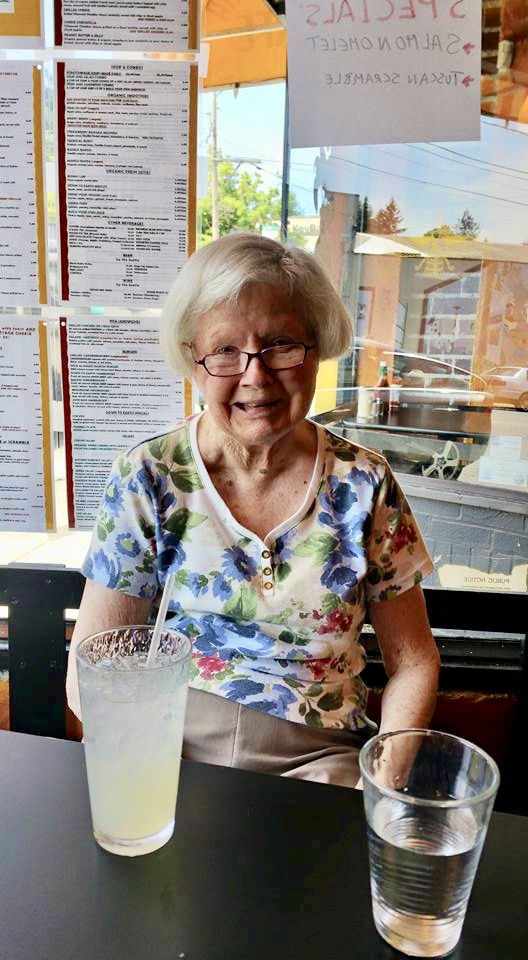
Because there is now more information on the effects of dementia than there ever was before, there has been new successful studies and medications to slow the process for the individuals who have received this diagnosis. People are living longer lives than we did when studies on memory loss were first being done, and therefore the number of people given this diagnosis has increased dramatically. Thankfully, there are non-profit organizations like the Alzheimer’s Association who collect resources and put on fundraising events like the Walk to End Alzheimer’s to help spread awareness and also give support to those families whose loved ones are living with this disease. While caring for my grandmother, I definitely did my research to find ways to support her and also take care of myself. Dementia can put severe stress on a caretaker if they don’t find support, so I wanted to make sure that I was as informed and ready for every stage in her progression.
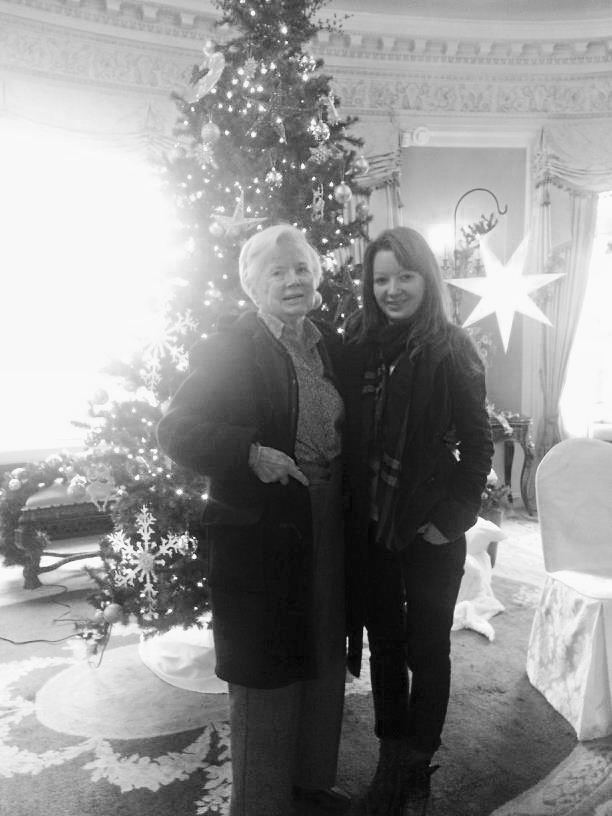
Above anything else, being Dede’s caretaker taught me both patience and organization. Before working with her, I considered myself to be a pretty patient and organized person, especially in the summers prior. From 2007 to 2010, I served as a cabin counselor at Dede’s and my beloved Camp Namanu in Sandy, Oregon for four consecutive summers. In doing that job, I was responsible for 6-8 kids in a cabin that ranged from 2nd to 12th graders for a 6-day work week. Most of the details that needed to be arranged were done at the beginning of the week, and then the rest of the job was making sure that everyone was getting to each activity on time and enjoying themselves. Since I had been a camper there myself, the work came pretty naturally to me. When I made the transition from caring for multiple campers to one grandmother, those skills I had acquired were put to the test and amplified.
At first, all that was needed was to drive her to her various appointments to get her hair done or do things with her social groups, help her with meals in the kitchen, take her to church on Sunday, and generally be her “buddy”. During those days, I would take her out for special adventures to Senior Day at the Oregon Zoo, Christmas at the Pittock Mansion, and picnics at local parks. As her disease started to slowly progress, her needs multiplied, so I had to allow for more time to do the simpler things like eating breakfast and getting dressed, and less time taking her to do activities that would eventually overwhelm her. For example, instead of driving her to her luncheons with her friends, I’d arrange for her friends to come to the house to have lunch with her. My grandmother has always been a social butterfly, and so for the people whom she used to see regularly, it was easy for them to understand her situation and they were fortunately very accommodating. To help myself keep her on schedule while also informing my grandfather of the day’s activities, I created a chart that detailed things like when she woke up, what she had for breakfast and lunch, any appointments she had, when she napped and anything else that I felt he needed to be aware of.
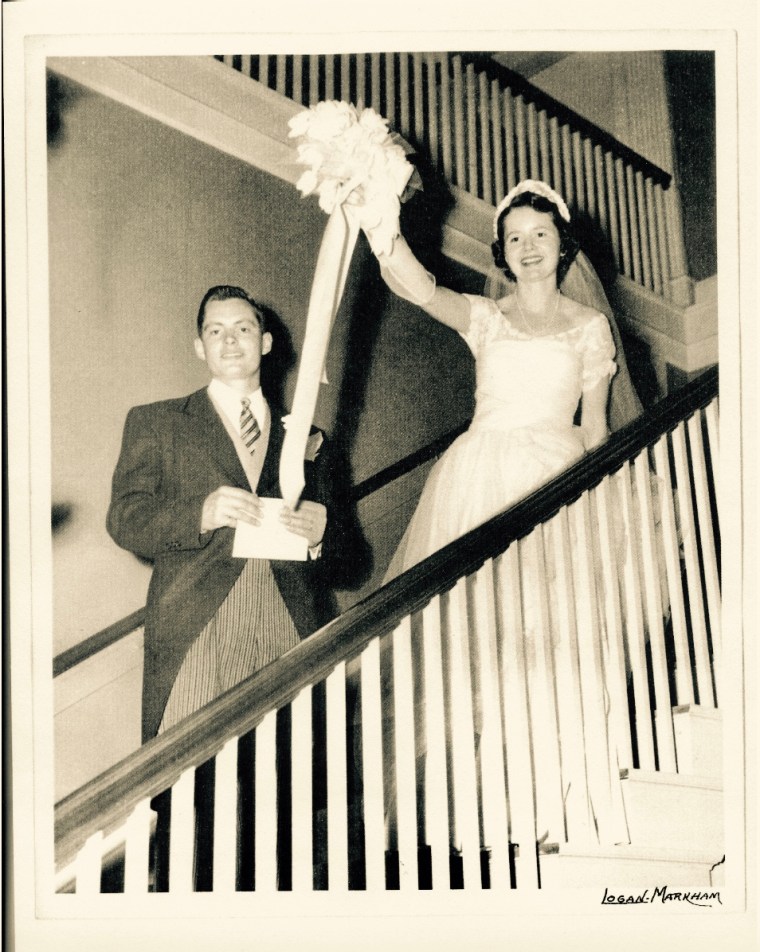
My grandparents were married April 11, 1953. They had met a few years prior at Stanford University after Delight had transferred there from the University of Oregon. From what I gathered, they fell madly in love with each other fairly quickly and were engaged in the spring of 1952. After marrying and moving back to Portland, they had four children (three boys and a girl) who became my grandmother’s whole world. Dede has always made it clear that family comes first, and she was instrumental in her children’s upbringing and later successes. Like other women of the age, she stayed home to raise her children, and cooked almost every dinner for my grandfather, and made sure to cook his especially favorite dishes just like his own mother had when he was growing up. Despite any ups or downs, both my grandparents put their love and respect for each other and the family first. After her diagnosis, my grandfather stepped up to shoulder those responsibilities the best he knew how. I don’t think he’ll ever understand how much we respect him for all he has had to adjust to, and all he has continued to put forward.
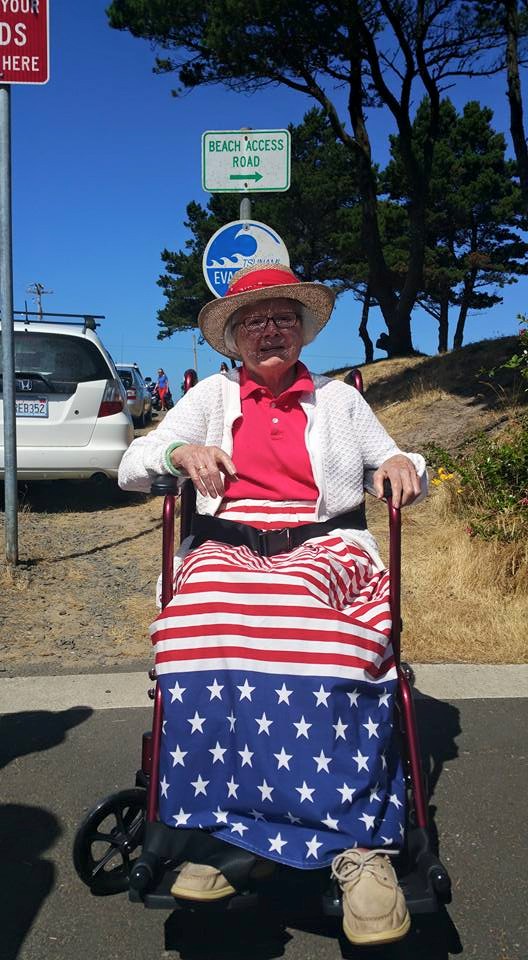
While Dede now lives in a place where she is given the proper care that she needs, our family still continues to visit her. Whether it is just to talk, sit with her at dinner, or decorate her room for Christmas, we have come together to care for her and each other. Losing someone to memory loss can be considered a very cruel trick of nature, but I now see it as a blessing. Dede has loved the people in her world so much, and now it is our duty, as it is for everyone who has loved ones diagnosed with dementia, to simply love them, respect those who choose to care for them and hold the memories of the times with them dear.
Aptly named, our Dede is our delight, and I will always consider her to be one of the great loves of my life.
Do you (or did you ever) have someone in your life with memory loss? Tell me your favorite memory with them in the comments below!

 Last but not least, the 30th Annual Oregon Brewers Festival could suitably be called the “Mac Daddy” of the beer festivals in Portland. According to the event website, the Oregon Brewers Festival got its start in July 1988 as the brainchild of Art Larrance, founder of Portland Brewing Co. Larrance had been to Oktoberfest in Munich and wanted to create a similar atmosphere while exposing locals to the variety of good microbrews. Since its start 30 years ago, it has attracted thousands to Portland’s Tom McCall Waterfront Park to taste numerous microbrews on tap. With the opportunity to sample dozens of craft beer styles, with 80 craft beers in the main festival, and another 90 rotating small batch beers in the Specialty Tent, one shouldn’t be surprised at birds of a feather definitely flock to this 5-day fest. The event also offers live music, beer-related vendors, beer memorabilia displays, home brewing demonstrations and an assortment of food vendors.
 Simply Margaret