 by
by As a native of Portland, Oregon, I started learning about the history of my city in the 3rd grade. We learned things like how Portland got its name, who the main players were in its development, and most importantly, the beautiful bridges that connect the East and West sides of the Willamette River.
While learning about the bridges, we’d take field trips to the river’s edge, discussing their history, the building process of each one, and how the city further developed after each bridge was completed. A highlight of 3rd grade was creating models of one of the bridges out of common household items from toothpicks to toilet paper rolls, and presenting them to the entire 3rd grade class. The most popular model was most definitely the St. Johns bridge.
Fast forward almost 20 years later, I found myself at the 37th Annual St. Johns Jazz Festival this past weekend. This summer fest is held outdoors on the lawn of one Portland’s most beautiful parks in one of the city’s oldest neighborhoods.

Cathedral Park, as it’s known, sits at the base of the St. Johns bridge, and it was given that name because of the gothic cathedral-like arches unique to the bridge. My favorite things about Cathedral Park, however, are the large supports that anchor it underneath, which resemble the exteriors of old European churches with large “windows”. These windows create great opportunities for photography, as they are strikingly beautiful at every angle.
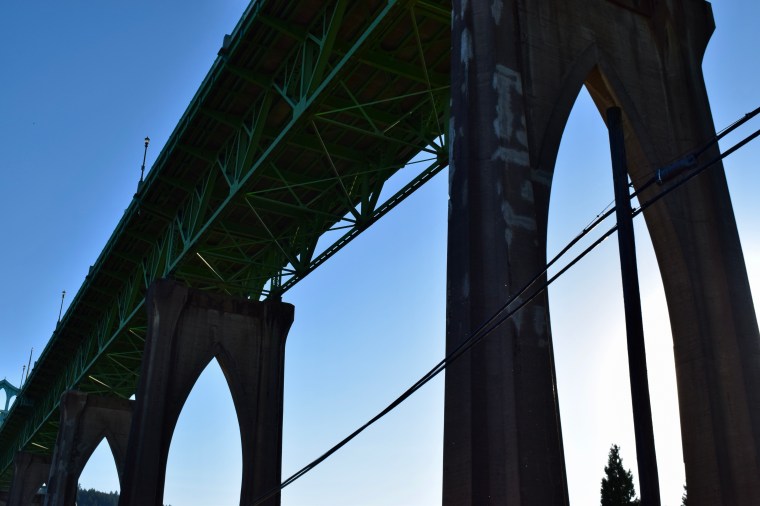
Of all the bridges in Portland’s chronological history, St. Johns sits at Number 7, behind the Burnside Bridge, and ahead of the Morrison. It was designed and built by internationally renowned engineer David B. Steinman and Holton D. Robinson of New York City. Construction began just before the Stock Market’s infamous crash in 1929, and over the next two years, it provided many with employment opportunities. According to my research, the bridge’s opening was delayed a month after its actual completion so that it could serve as the defining focal point for the Rose City’s Rose Festival. As the only steel suspension bridge in the Willamette Valley, and having been constructed during the worst financial crisis the country had ever known, I’m positive that the citizens of the city viewed the St. Johns bridge as a beacon of hope and ingenuity, as well as connection of the center of town to the heart of the St. Johns neighborhood five miles away.

Cathedral Park opened just after the bridge was finished, and stands as the perfect representation of its location. The St. Johns neighborhood is known for being very tight-knit, and it still centers on celebrating the creativity and bourgeois attitude of its townsfolk. The Jazz Fest, for example, is a highlight of the year, as it seeks to bring St. Johns neighbors as well as those living out further in the Metro area for a free opportunity to celebrate the love and the growth of Portland’s music scene. People from far and wide come to the Fest with their loved ones and pets to sit down on the grassy knoll and appreciate the music, the scenery, and each other.
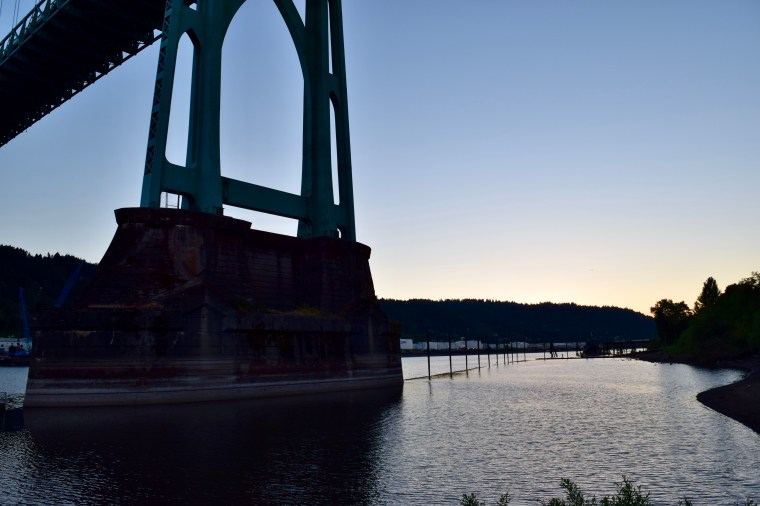
As I made my way down to the river’s edge, the sun was just starting to go down on another clear and perfect summer evening in Portland. A gentle breeze blew in, and with it, an almost spiritual sensation came over me. No matter what has ever been thrown their way, the people of St. Johns have never let it overcome and overwhelm them. They keep thriving, creating, and connecting with each other. This community is not one of the wealthiest in Portland when it comes to money, but it is when defined by building each other up.

What do you think makes the St. Johns neighborhood so special? Tell me in the comments below!
 Simply Margaret
Leave a comment